Drain Water Heat Recovery
As we transition toward more energy-efficient buildings, the primary demand for heating increasingly shifts from space heating to hot water. Upon reflection, this process appears highly inefficient, as substantial energy is expended in heating water for brief usage, such as a five-seconds in the shower, only for that energy to be lost, essentially washed down the drain.
The system captures the heat that would otherwise be wasted, recycling it to reduce overall energy consumption.
This innovative approach not only decreases energy costs but also plays a pivotal role in reducing your carbon footprint. By recovering and reusing heat, Q Blue transforms waste into a valuable resource, offering a sustainable solution to contemporary energy challenges while enhancing daily comfort.
Q Blue Drain Water Heat Recovery is the ideal solution for:
- Passive House and low-energy projects
- Homes aiming to cut hot water energy use
- Sustainable retrofit and new build developments
- Projects targeting reduced carbon footprint
- Enhancing comfort with greater energy efficiency
This Drain Water Heat Recovery system is Passive House certified, meeting the rigorous energy performance and quality criteria required for certified Passive House, plus low-energy standard builds.

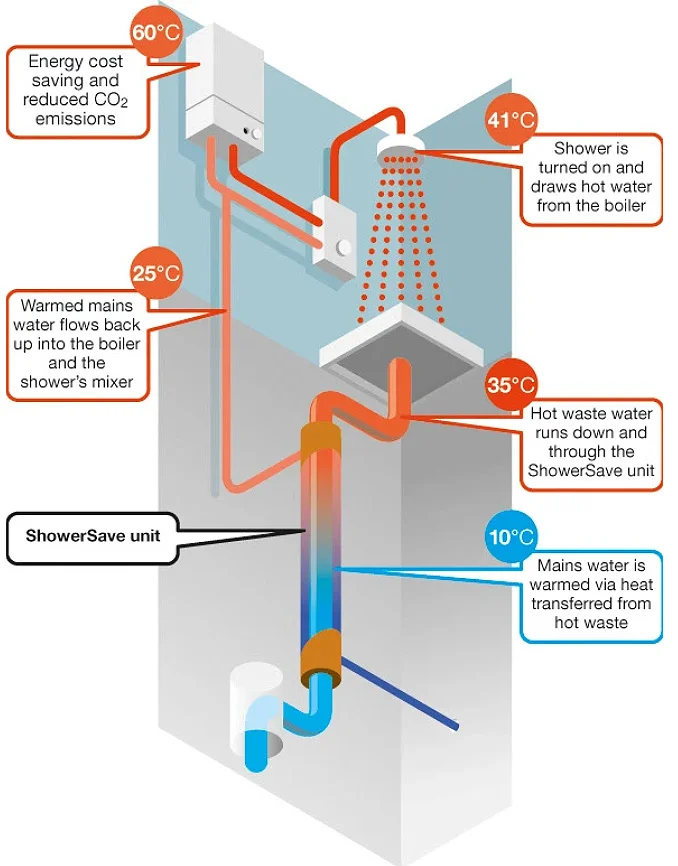
How Drain Water
Heat Recovery Works
Q Blue uses innovative heat recovery technology to capture and reuse energy from warm wastewater, making your home more energy-efficient and sustainable.
Hot Water Usage
To heat the shower, water is heated in the boiler, the hot water then flows to the shower head for use.
Wastewater Heat Recovery
After use, the hot wastewater (still approximately 35°C) flows down the drain and passes through the Blue Q unit.
Heat Transfer Process
Inside the Blue Q unit, the heat from the warm wastewater is transferred to the cold mains water entering the system. This process preheats the cold water from approximately 10°C to approximately 25°C without the two water streams mixing.
Energy Efficiency
This preheated water then flows to the boiler, thereby requiring less energy to heat it up to the desired temperature (60°C), significantly reducing energy consumption.
Key Benefits
- Reduces energy costs by reusing heat from wastewater.
- Helps lower CO2 emissions, contributing to a greener home.
- Requires no maintenance and lasts a lifetime.
- Supports compliance with Part L of Building Regulations.
- Enhances environmental impact by reducing your home’s carbon footprint.
- Works seamlessly with renewable energy systems such as solar panels and heat pumps.
- Improves your home’s energy performance rating, boosting property value.
- Increases hot water system efficiency.
- Reduces operating time of heating boiler thereby extending its lifespan.
- Compact design ensures easy installation without major renovations.